Halloween is approaching (as if you hadn’t noticed). So
naturally you’ll be searching for various horror movies to watch over this
sort-of-holiday. It does get you thinking though as you examine various horror
movies, how some manage to provide you with a cheap scare and yet others stay
with you for far longer than their running time. Why is that? Well to sound
slightly pretentious, society. Every now and then a horror film, by design or
accident, latches on to a trend in society and exploits the fear that it
generates. Where cinematic horror was once a celebration of how different its creatures
were from us, filmmakers soon began to use it as a way to reflect the fears its
audiences held about society and mould it into a memorable sense of horror.
 Back in the earlier days of cinema one of the most notable
aspects of the business was censorship that in America was upheld by deeply
Christian groups. So as a result one could make an incredibly horrifying film
with two resources, themes that went against Christian values, and implied imagery.
By doing these two things it was virtually guaranteed that you would frighten
the censors who are paid to analyse every detail and decipher every suggested
frame of your movie. ‘Nosferatu’ of 1922 was a German expressionist film a
genre that lived off implying its themes through imagery. By directly defying
so many of the values of the censorship boards the film earned itself a condemnation,
the movie itself became more frightening than anything it was depicting. It did
not matter how frightening it actually was, as long as everyone was telling you
it was scary, you would be wary of said film.
History lesson (don’t worry I’ll hold your hand through it,
actually that sounds worryingly creepy). In the 1950s World War 2 was over, but
for most American people there was another fear within society. It was
communism. Whether this fear was justified or not, government heavyweights like
Joseph McCarthy worked to fuel those fears and emphasised the identification
and subversion through what was later called The Red Scare. Movie time now, as
‘Invasion of the Body Snatchers’ stuck to the popular genre of the time with science
fiction. The plot involves a man who is horrified to discover that people in
his town have been replaced with alien duplicates known as pod-people. His delirious
ramblings attract attention from the townspeople and soon he is unsure who is
real and who is a duplicate.
So who represents who? Well pod-people are the communists in
this scenario (obviously this is relative to how the public perceived them at
the time), a festering race of aliens that will absorb you into their society,
and you in turn will do the same to everyone you know and will spread across
the world. But in that respect, does the man who discovers them represent
McCarthy, deliriously running around, accusing his neighbours and friends of
being traitors? Did ‘Invasion of the Body Snatchers’ even intentionally use
this fear of communism, or was it just a coincidence that one can only see in
retrospect. As well as that of course the film could be an allegory that
criticises The Red Scare or justifies it.
Danger in disguise was the main message of horror now, and
no one epitomised that better than a young man known as Norman Bates. You know
the story of Psycho, so let’s go straight into analysis. Following two world
wars on an industrial scale many people were now witnessing first hand
psychological damage, but though it was becoming a more accepted ailment, the
average person still had little understanding of it and usually found the
notion of one person undergoing a complete personality change rather
frightening. These murders are unmotivated and committed with a sudden and
violent rage that basically said to people that anyone can kill you at any
time.
By 1968 the Civil Rights movement was still taking place,
and arguments about racial equality and desegregation were raging perhaps more
than ever. But when a zombie invasion takes place (I am talking about films
now, you did not miss a page of your history textbook about zombies) the few
survivors must band together regardless of racial prejudice because they are
all that is left of humanity. ‘Night of the Living Dead’ definitely had a lot
to say about how humans can be more destructive to themselves than any of the
undead, with just a few handfuls of people left abrasive personalities turn on
each other. The whole point is only further emphasised by the films ending,
spoiler ahead. Our black protagonist Sam is shot by another survivor (either
mistaking him for a zombie or in a more sinister interpretation, seeing it as a
chance to kill Sam out of racial hatred), unless we put these prejudices aside
we will ultimately destroy ourselves. Then there is the fact that the zombies
arise from a nuclear fallout, where did that idea come from I wonder?
Back in the earlier days of cinema one of the most notable
aspects of the business was censorship that in America was upheld by deeply
Christian groups. So as a result one could make an incredibly horrifying film
with two resources, themes that went against Christian values, and implied imagery.
By doing these two things it was virtually guaranteed that you would frighten
the censors who are paid to analyse every detail and decipher every suggested
frame of your movie. ‘Nosferatu’ of 1922 was a German expressionist film a
genre that lived off implying its themes through imagery. By directly defying
so many of the values of the censorship boards the film earned itself a condemnation,
the movie itself became more frightening than anything it was depicting. It did
not matter how frightening it actually was, as long as everyone was telling you
it was scary, you would be wary of said film.
History lesson (don’t worry I’ll hold your hand through it,
actually that sounds worryingly creepy). In the 1950s World War 2 was over, but
for most American people there was another fear within society. It was
communism. Whether this fear was justified or not, government heavyweights like
Joseph McCarthy worked to fuel those fears and emphasised the identification
and subversion through what was later called The Red Scare. Movie time now, as
‘Invasion of the Body Snatchers’ stuck to the popular genre of the time with science
fiction. The plot involves a man who is horrified to discover that people in
his town have been replaced with alien duplicates known as pod-people. His delirious
ramblings attract attention from the townspeople and soon he is unsure who is
real and who is a duplicate.
So who represents who? Well pod-people are the communists in
this scenario (obviously this is relative to how the public perceived them at
the time), a festering race of aliens that will absorb you into their society,
and you in turn will do the same to everyone you know and will spread across
the world. But in that respect, does the man who discovers them represent
McCarthy, deliriously running around, accusing his neighbours and friends of
being traitors? Did ‘Invasion of the Body Snatchers’ even intentionally use
this fear of communism, or was it just a coincidence that one can only see in
retrospect. As well as that of course the film could be an allegory that
criticises The Red Scare or justifies it.
Danger in disguise was the main message of horror now, and
no one epitomised that better than a young man known as Norman Bates. You know
the story of Psycho, so let’s go straight into analysis. Following two world
wars on an industrial scale many people were now witnessing first hand
psychological damage, but though it was becoming a more accepted ailment, the
average person still had little understanding of it and usually found the
notion of one person undergoing a complete personality change rather
frightening. These murders are unmotivated and committed with a sudden and
violent rage that basically said to people that anyone can kill you at any
time.
By 1968 the Civil Rights movement was still taking place,
and arguments about racial equality and desegregation were raging perhaps more
than ever. But when a zombie invasion takes place (I am talking about films
now, you did not miss a page of your history textbook about zombies) the few
survivors must band together regardless of racial prejudice because they are
all that is left of humanity. ‘Night of the Living Dead’ definitely had a lot
to say about how humans can be more destructive to themselves than any of the
undead, with just a few handfuls of people left abrasive personalities turn on
each other. The whole point is only further emphasised by the films ending,
spoiler ahead. Our black protagonist Sam is shot by another survivor (either
mistaking him for a zombie or in a more sinister interpretation, seeing it as a
chance to kill Sam out of racial hatred), unless we put these prejudices aside
we will ultimately destroy ourselves. Then there is the fact that the zombies
arise from a nuclear fallout, where did that idea come from I wonder?
 A lot of bad stuff had gone down in the 1960s, to such an
extent that by 1973 many people were stating that the classic American dream
and its ideologies was dead. Households were no longer whole, religion was a
source of conflict not unity and even children were left exposed to the evils
of the world. Did I hear ‘the power of Christ compels you’? Yes The Exorcist,
the one and only. For all the reasons I just listed this satanic horror had a
profound impact on so many moviegoers. Parental negligence and a broken home
was why Linda Blair was left vulnerable to being possessed by Satan and as a
key part of religious teachings, the idea that religion brought so much fear
and pain to a home only further damaged that notion of the death of classic
America. And the subject of that possession is a little girl. How much more
cynical can the outlook get? Well the fact that other religious horrors about
family like ‘Rosemary’s Baby’ and ‘The Omen’ came out just hammered that point
in further.
The evil of ‘The Exorcist’ also penetrates homes, leaving no
safe haven. What else did that in the 1970s? Of course, Mr Michael Myers. By
1978 there was a growing fear that nowhere was safe, the Zodiac Killer brought
on a serial killer craze and even the President was capable of scandal and conspiracy
(the remake of ‘Invasion of the Body Snatchers’ served as a metaphor for closed
door conspiracies). But aside from that, John Carpenter’s ‘Halloween’
popularised the slasher genre as a perfect metaphor for both of those. An
unstoppable and unmotivated killer slashes through victims, invading their
homes at random selection (sounds familiar to ‘Psycho’, well wrap your head
around the fact that ‘Halloween’s’ star Jamie Lee Curtis is the daughter of
Janet Leigh, star of ‘Psycho’, that cannot be an accident).
A lot of bad stuff had gone down in the 1960s, to such an
extent that by 1973 many people were stating that the classic American dream
and its ideologies was dead. Households were no longer whole, religion was a
source of conflict not unity and even children were left exposed to the evils
of the world. Did I hear ‘the power of Christ compels you’? Yes The Exorcist,
the one and only. For all the reasons I just listed this satanic horror had a
profound impact on so many moviegoers. Parental negligence and a broken home
was why Linda Blair was left vulnerable to being possessed by Satan and as a
key part of religious teachings, the idea that religion brought so much fear
and pain to a home only further damaged that notion of the death of classic
America. And the subject of that possession is a little girl. How much more
cynical can the outlook get? Well the fact that other religious horrors about
family like ‘Rosemary’s Baby’ and ‘The Omen’ came out just hammered that point
in further.
The evil of ‘The Exorcist’ also penetrates homes, leaving no
safe haven. What else did that in the 1970s? Of course, Mr Michael Myers. By
1978 there was a growing fear that nowhere was safe, the Zodiac Killer brought
on a serial killer craze and even the President was capable of scandal and conspiracy
(the remake of ‘Invasion of the Body Snatchers’ served as a metaphor for closed
door conspiracies). But aside from that, John Carpenter’s ‘Halloween’
popularised the slasher genre as a perfect metaphor for both of those. An
unstoppable and unmotivated killer slashes through victims, invading their
homes at random selection (sounds familiar to ‘Psycho’, well wrap your head
around the fact that ‘Halloween’s’ star Jamie Lee Curtis is the daughter of
Janet Leigh, star of ‘Psycho’, that cannot be an accident).
 Finally, has any horror film provoked as much analysis and
deliberation as ‘The Shining’. Initially the film was received harshly (even
nominated for a few Razzie Awards) but over time gained a huge following and
acclaim. Why? Well I would be one of many to try and decipher what this film
means (there is even a movie called ‘Room 237’ specifically devoted to finding
out what it means). Maybe, just maybe that is the most frightening thing about ‘The
Shining’. As society became more concerned with what it knew and the
information age took over, to be presented with something that had so many
deeper meanings and possible interpretations is almost unnerving, and if the blood filled elevator, slaughtered twins, carpet patterns, locked vault doors and eerie photographs from 1921 all actually mean one conclusive thing, I shudder to think of what hellish nightmare it could be. Even though I
think Stanley Kubrick may the most unique and ingenious directorial mind of all
time I admit it would be a stretch to say that he predicted the rise of the
internet. But I think he understood that sometimes allowing things to fester
within people’s minds generates more terror than anything you can show them. If
you ask them to draw a conclusion for themselves it can serve as a metaphor for
their own personal fears, regardless of the context in society or culture that
they first see his movie. Kubrick did the same thing for science fiction with ‘2001:
A Space Odyssey’, he did it with crime in ‘A Clockwork Orange’ and he did the
same thing for horror with ‘The Shining’, perhaps that makes it the most
timeless horror film of all time.
So those are my ramblings on horror movies but I would love
to hear yours. Feel free to leave a comment below, thanks and bye.
Finally, has any horror film provoked as much analysis and
deliberation as ‘The Shining’. Initially the film was received harshly (even
nominated for a few Razzie Awards) but over time gained a huge following and
acclaim. Why? Well I would be one of many to try and decipher what this film
means (there is even a movie called ‘Room 237’ specifically devoted to finding
out what it means). Maybe, just maybe that is the most frightening thing about ‘The
Shining’. As society became more concerned with what it knew and the
information age took over, to be presented with something that had so many
deeper meanings and possible interpretations is almost unnerving, and if the blood filled elevator, slaughtered twins, carpet patterns, locked vault doors and eerie photographs from 1921 all actually mean one conclusive thing, I shudder to think of what hellish nightmare it could be. Even though I
think Stanley Kubrick may the most unique and ingenious directorial mind of all
time I admit it would be a stretch to say that he predicted the rise of the
internet. But I think he understood that sometimes allowing things to fester
within people’s minds generates more terror than anything you can show them. If
you ask them to draw a conclusion for themselves it can serve as a metaphor for
their own personal fears, regardless of the context in society or culture that
they first see his movie. Kubrick did the same thing for science fiction with ‘2001:
A Space Odyssey’, he did it with crime in ‘A Clockwork Orange’ and he did the
same thing for horror with ‘The Shining’, perhaps that makes it the most
timeless horror film of all time.
So those are my ramblings on horror movies but I would love
to hear yours. Feel free to leave a comment below, thanks and bye.


 Movies act
as a way to represent certain attitudes and social opinions on a wide and
potentially ultra-subliminal level. If there is one theme that has been
repeated and altered time and time again it is the American Dream. The way it is
represented in cinema can demonstrate and entire nations attitude, sometimes
hopeful, cynical or accepting. It has evolved several times over the years and
has been reiterated time and time again.
James
Stewart was no stranger to representing the American every-man. He displayed it
once with ‘It’s a Wonderful Life’ in which he told the story of living and its
value for even the most ordinary citizen. His next project was ‘Mr Smith Goes
to Washington’ and it rallied the theme of the American Dream to a political
level. One key aspect of this dream is good old American democracy (as if that
would ever be violated or questioned over the next century). Maintaining such
an ideology against corruption and self-servitude is essential here, as Senator
Smith defends what he believes in (and what his audience believed in) against
corrupt government officials. But at the same time he also argues that just because
their political system is flawed it is worth fighting for, reaffirming how the
system works despite the exploitative actions of some. Quite a hopeful, good vs
evil, viewpoint, andan effective one.
But in just
a few short years Orson Welles would bring forth his seminal masterpiece ‘Citizen
Kane’. For half of the film it’s the classic American Dream, a self-made man
from humble origins is given a chance to build his own empire and succeeds. But
it’s as this empire spirals out of control that Welles makes his point of how
his fortune is at the expense of Kane’s own happiness, and is always
reminiscent of his childhood. Not only that, but by the end of his life, he
sees only an empty abyss dominated by his own image, yet no one else’s. In
short ‘Citizen Kane’ is a much more cautionary tale of success, personified by
his valuable possessions and palace that may appear to be the ultimate sign of
freedom, but end up resembling a prison entrapping Kane.
So that’s how adults handled the American Dream to that
point, but what about the youngsters, how do they view this limitless potential
and freedom. Well as ‘Rebel Without a Cause’ pointed out in 1955, they’re not
sure what to do. Instead of taking the route of how naivety is where dreams are
most likely to occur, James Dean’s character is torn at the crossroads of independence.
He notices the flaws of his parents, the difference between their generations
and is unable to find a reason for various actions he carries out. The
quintessential rebellious youth spoke to an entire generation of baby boomers
in the 1950s, conceived out of a fresh perspective on living, then criticised
for trying to do it themselves.
The New Hollywood Movement had its fair share of takes on the
American Dream, yet none are quite as epic as ‘Easy Rider’. It’s classic
counterculture and classic critique of everything that America valued at the
time. After earning a huge amount of money from a drug deal, two friends go on
a road trip to a new life where they can spend it. Not only does it point out
the immoral way the two earn their success, is highlights how even without
knowing their method of success, the rest of the world seems to resent the
friends for their success. It would appear that while everyone wants to achieve
the American Dream, no one wants to see anyone else achieve it.
‘Rocky’ may appear to be a one dimensional tale of the
American Dream, down on his luck hero gets chance and earns his dreams. But remember
Rocky Balboa does not win his fight with Apollo Creed (spoiler, but then again
it came out nearly forty years ago so, what are you doing instead of watching
it?) In fact, one could say that ‘Rocky’s’ version of the American Dream is a parallel
to ‘Citizen Kane’s’ version. Instead of getting success without happiness,
Rocky achieves happiness without total success (until all of that was undone in
the sequels where he becomes the world heavy weight champion, ends the cold war
and does the MOST MONTAGES EVER). Of course what Rocky does get is Adrian, and
rather than the girls acting as a side note to the main victory, but for Rocky,
Adrian’s love is the main victory. Sylvester Stallone pretty much did the ‘Rocky’
story himself to make the movie, and wanted to ensure that though Rocky does
not win, he succeeds on his own terms.
Crime is a way to tell an American Dream story better than
anything else, especially crime movies by New Hollywood. Coppola and Scorsese
are both great at this, but perhaps the most quintessential version of it comes
from Brian De Palma’s ‘Scarface’. The tagline says enough ‘He loved the
American Dream with a vengeance’. Tony Montana’s American Dream, like all
versions of it through crime, is a falsification of it and displays the
immorality of his quest to get to the top, as well as the glorification of it.
This egotistical side of Tony is his inevitable downfall, which perhaps says
more about how this dream can ultimately be an illusion.
Illusion can be the strongest asset in deciding whether or
not you have succeeded. In 1997 PT Anderson brought forward his take on stardom
and the American Dream, ‘Boogie Nights’. The artificial nature of this world
his brought forward time and time again, we watch how Mark Walberg, by sheer
luck manages to find his one large attribute (you know what I’m talking about
if you’ve seen it) which erodes all of his failures in academia and real world
knowledge. PT Anderson could have just used any area of the film industry to
set his story, yet he chose the porn industry. For one simple reason only, it
draws more attention to how the characters’ success is simply on a primal level,
reliant completely upon their viewers literal idolisation of their bodies,
nothing else. This American Dream is all artificial and completely shallow, yet
for them it is success and by the end of the film, when Walberg has his fortune
and legions of fans, it’s difficult to argue with it.
Until this point these stories had been staged on epic and
unique settings, like political showdowns, drug fuelled biker road trips. Cocaine
empires and porn stars. But Sam Mendes wanted to redefine the American Dream
with suburbia, he did so in 1999 with ‘American Beauty’. It’s not about trying
to achieve the dream, it is about what you do afterwards. Lester Burnham is
bored with the mundane nature of his life, and seeks to embrace a
counterculture lifestyle that’s thirty years out of date. There’s a deep
hollowness to the dream here, and one that is only partially redeemable by a
more optimistic ending. Yet that message still speaks strongly today.
PT Anderson was back with his own take on the ‘Citizen Kane’
story. In ‘There Will Be Blood’ Danial Plainview is a self-made man, like
Charles Kane. But rather than merely sacrificing his happiness for success,
Plainview sacrifices his entire humanity. The animalistic aggression, vile
hatred within him and sheer primal rage seep through in Daniel Day Lewis’
performance as he not only seeks to triumph over his competitors, he wants to
destroy them, devalue their beliefs and morals, ruin their finances and
personally assure their absolute decimation. It’s a tale of how the American
Dream can become a mad and desperate struggle for victory, in which all that
makes a person human can be lost.
Not a positive way to end, and it only gets worse. Martin
Scorsese brought forward another take on the American Dream in 2013, and may be
his most disturbing yet. In ‘The Wolf of Wall Street’ Jordan Belfort lives on
pure excess, he is fuelled by drugs and pleasure and we as an audience witness
it first-hand. Not only do we admire him, partially, we want to be him. His
world of gluttony and fortune is appealing despite the immorality of it, and as
he delivers that sale seminar by the end, just like Belfort’s audience we are
left in a mixed state of disgust, but more worryingly, awe. What does that say
about our dreams?
But what do you think, is there a movie that wasn't on the article, one that was but shouldn't have been. Leave a comment below if you think so, thanks and bye.
Movies act
as a way to represent certain attitudes and social opinions on a wide and
potentially ultra-subliminal level. If there is one theme that has been
repeated and altered time and time again it is the American Dream. The way it is
represented in cinema can demonstrate and entire nations attitude, sometimes
hopeful, cynical or accepting. It has evolved several times over the years and
has been reiterated time and time again.
James
Stewart was no stranger to representing the American every-man. He displayed it
once with ‘It’s a Wonderful Life’ in which he told the story of living and its
value for even the most ordinary citizen. His next project was ‘Mr Smith Goes
to Washington’ and it rallied the theme of the American Dream to a political
level. One key aspect of this dream is good old American democracy (as if that
would ever be violated or questioned over the next century). Maintaining such
an ideology against corruption and self-servitude is essential here, as Senator
Smith defends what he believes in (and what his audience believed in) against
corrupt government officials. But at the same time he also argues that just because
their political system is flawed it is worth fighting for, reaffirming how the
system works despite the exploitative actions of some. Quite a hopeful, good vs
evil, viewpoint, andan effective one.
But in just
a few short years Orson Welles would bring forth his seminal masterpiece ‘Citizen
Kane’. For half of the film it’s the classic American Dream, a self-made man
from humble origins is given a chance to build his own empire and succeeds. But
it’s as this empire spirals out of control that Welles makes his point of how
his fortune is at the expense of Kane’s own happiness, and is always
reminiscent of his childhood. Not only that, but by the end of his life, he
sees only an empty abyss dominated by his own image, yet no one else’s. In
short ‘Citizen Kane’ is a much more cautionary tale of success, personified by
his valuable possessions and palace that may appear to be the ultimate sign of
freedom, but end up resembling a prison entrapping Kane.
So that’s how adults handled the American Dream to that
point, but what about the youngsters, how do they view this limitless potential
and freedom. Well as ‘Rebel Without a Cause’ pointed out in 1955, they’re not
sure what to do. Instead of taking the route of how naivety is where dreams are
most likely to occur, James Dean’s character is torn at the crossroads of independence.
He notices the flaws of his parents, the difference between their generations
and is unable to find a reason for various actions he carries out. The
quintessential rebellious youth spoke to an entire generation of baby boomers
in the 1950s, conceived out of a fresh perspective on living, then criticised
for trying to do it themselves.
The New Hollywood Movement had its fair share of takes on the
American Dream, yet none are quite as epic as ‘Easy Rider’. It’s classic
counterculture and classic critique of everything that America valued at the
time. After earning a huge amount of money from a drug deal, two friends go on
a road trip to a new life where they can spend it. Not only does it point out
the immoral way the two earn their success, is highlights how even without
knowing their method of success, the rest of the world seems to resent the
friends for their success. It would appear that while everyone wants to achieve
the American Dream, no one wants to see anyone else achieve it.
‘Rocky’ may appear to be a one dimensional tale of the
American Dream, down on his luck hero gets chance and earns his dreams. But remember
Rocky Balboa does not win his fight with Apollo Creed (spoiler, but then again
it came out nearly forty years ago so, what are you doing instead of watching
it?) In fact, one could say that ‘Rocky’s’ version of the American Dream is a parallel
to ‘Citizen Kane’s’ version. Instead of getting success without happiness,
Rocky achieves happiness without total success (until all of that was undone in
the sequels where he becomes the world heavy weight champion, ends the cold war
and does the MOST MONTAGES EVER). Of course what Rocky does get is Adrian, and
rather than the girls acting as a side note to the main victory, but for Rocky,
Adrian’s love is the main victory. Sylvester Stallone pretty much did the ‘Rocky’
story himself to make the movie, and wanted to ensure that though Rocky does
not win, he succeeds on his own terms.
Crime is a way to tell an American Dream story better than
anything else, especially crime movies by New Hollywood. Coppola and Scorsese
are both great at this, but perhaps the most quintessential version of it comes
from Brian De Palma’s ‘Scarface’. The tagline says enough ‘He loved the
American Dream with a vengeance’. Tony Montana’s American Dream, like all
versions of it through crime, is a falsification of it and displays the
immorality of his quest to get to the top, as well as the glorification of it.
This egotistical side of Tony is his inevitable downfall, which perhaps says
more about how this dream can ultimately be an illusion.
Illusion can be the strongest asset in deciding whether or
not you have succeeded. In 1997 PT Anderson brought forward his take on stardom
and the American Dream, ‘Boogie Nights’. The artificial nature of this world
his brought forward time and time again, we watch how Mark Walberg, by sheer
luck manages to find his one large attribute (you know what I’m talking about
if you’ve seen it) which erodes all of his failures in academia and real world
knowledge. PT Anderson could have just used any area of the film industry to
set his story, yet he chose the porn industry. For one simple reason only, it
draws more attention to how the characters’ success is simply on a primal level,
reliant completely upon their viewers literal idolisation of their bodies,
nothing else. This American Dream is all artificial and completely shallow, yet
for them it is success and by the end of the film, when Walberg has his fortune
and legions of fans, it’s difficult to argue with it.
Until this point these stories had been staged on epic and
unique settings, like political showdowns, drug fuelled biker road trips. Cocaine
empires and porn stars. But Sam Mendes wanted to redefine the American Dream
with suburbia, he did so in 1999 with ‘American Beauty’. It’s not about trying
to achieve the dream, it is about what you do afterwards. Lester Burnham is
bored with the mundane nature of his life, and seeks to embrace a
counterculture lifestyle that’s thirty years out of date. There’s a deep
hollowness to the dream here, and one that is only partially redeemable by a
more optimistic ending. Yet that message still speaks strongly today.
PT Anderson was back with his own take on the ‘Citizen Kane’
story. In ‘There Will Be Blood’ Danial Plainview is a self-made man, like
Charles Kane. But rather than merely sacrificing his happiness for success,
Plainview sacrifices his entire humanity. The animalistic aggression, vile
hatred within him and sheer primal rage seep through in Daniel Day Lewis’
performance as he not only seeks to triumph over his competitors, he wants to
destroy them, devalue their beliefs and morals, ruin their finances and
personally assure their absolute decimation. It’s a tale of how the American
Dream can become a mad and desperate struggle for victory, in which all that
makes a person human can be lost.
Not a positive way to end, and it only gets worse. Martin
Scorsese brought forward another take on the American Dream in 2013, and may be
his most disturbing yet. In ‘The Wolf of Wall Street’ Jordan Belfort lives on
pure excess, he is fuelled by drugs and pleasure and we as an audience witness
it first-hand. Not only do we admire him, partially, we want to be him. His
world of gluttony and fortune is appealing despite the immorality of it, and as
he delivers that sale seminar by the end, just like Belfort’s audience we are
left in a mixed state of disgust, but more worryingly, awe. What does that say
about our dreams?
But what do you think, is there a movie that wasn't on the article, one that was but shouldn't have been. Leave a comment below if you think so, thanks and bye.

 So now I
move on to Part 2 of my series about dead comedy in cinema. Obviously like all
comedy sequels it will be significantly worse than the first but you’re here
now and you might as well read on, just be thankful that at least I warned you
in advance unlike ‘Hangover 2’ or ‘Ted 2’ or any other less than stellar comedy
sequel. Last time I looked at screwball, but the other dead form of comedy
today seems to be parody. Where did all the parody films go?
Satire goes
as far back as Charles Chaplin (because by the 1940s he was formal and grown
up, slightly) with his first talking film ‘The Great Dictator’ that originally
spawned because someone made a remark that Chaplin looked a bit like Hitler,
and given that he was famously an outspoken critic of the Nazis long before
World War 2, when war finally arrived in Europe Chaplin made his satire film
about a dictator who was almost, not-quite-but-we-all-know-that-he-really-is, a
complete caricature of Hitler. It was a huge hit (even more so today as back
then there was some criticism, mostly from Germany) not just because of the
jokes or the mockery it was due to the fact that Chaplin really did look like
Hitler, a dictator reigning over an entire country, and this just made the idea
of him being a complete buffoon even more hilarious, like giving a warlike
speech that just turns into uncontrollable coughing or juggling an inflatable
globe but all in the shape of someone so notorious.
Then the
next serious parody was Mel Brooks’ ‘Young Frankenstein’. This had a similar brilliance
to it in the sense that it took something very frightening and familiar in
people’s minds and made it hilarious. Once again it came from the fact that
Brooks was able to recreate the atmosphere and the mood of the original ‘Frankenstein’
so well that any silly or humorous modifications to it weren’t just amusing, they
were hysterical. If you could sum it up in one way, I wouldn’t even say the
comedic figures are idiots, they just happen to display some of the more
notable flaws of humanity in the most serious of circumstances. You’ve got the
fact that Igor is in such denial he does not even know he has a deformed spine,
or instead of being called Frankenstein the Doctor insists that his students
pronounce his name as Frank-en-steen. The contrast pf putting something so humorous
next to such a detailed recreation of horror is what makes it truly special.
Mel Brooks
had yet more success by parodying westerns with ‘Blazing Saddles’ and ‘science
fiction with ‘Space Balls’. Then there were new arrivals with the Zucker Brothers/Abrahams
team that would make ‘Hot Shots’, ‘The Naked Gun’ and of course ‘Airplane!’ They
were all huge successes and seen by many as a new age in comedy that would last
for a long time, they were seen as money makers came out as fast as they could.
And that is exactly what killed them. Many imitators sprang up and thought they
could nail this success with a simple formula; some references, slapstick, a
bit of satire and you had it. In fact that first one seemed to be especially
important, as it was theorized that the more references you could get into a
movie, the more money it would make.
The problem
with this tactic was that there wasn’t always something interesting or funny to
say about these references, they were there for the sake of making it look like
another movie instead of having something genuinely comical to do with it.
Furthermore it made the movie feel crowded, more episodic and more like a TV
series than a movie. The comedy was not focused, clever or very comedic. The
result were poor efforts such as ‘Spy Hard’, ‘Wrongly Accused’ and even Mel
Brooks seemed to be lacking in ‘Dead and Loving It’. Then the Zucker/Abrahams
team went their own ways and found little success on their own, gradually
making less and less money.
And so,
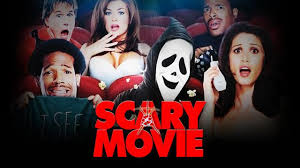
parody movies were dead…. Until the summer of 2000 with ‘Scary Movie’. This one
was different, not only did it make fun of horror films it paid special
attention to the horror films of recent years to the movie’s release. They didn’t
bother to see if the film would stand the test of time, they just went after it
specifically while it was still fresh in people’s minds. Watching ‘Airplane!’
today, it’s still funny, watching ‘Scary Movie’, I don’t even remember half of
the jokes or references. As well as this they weren’t just going after a
specific genre either, sure they had parodies of horror like ‘The Exorcist, ‘The
Sixth Sense’, ‘The Shining’ and ‘Scream’. But they also threw out references to
‘Thelma and Louise’, ‘Boogie Nights’ and even ‘Schindler’s List’ (yeah because
that’s a subject that’s ripe with potential humor). It also took a leaf out of
the ‘American Pie’ book and injected a lot of gross out humor (and I mean
really over the top, s**t in your face kind of gross out). But it was a huge
success, so regardless of whether its quality rivalled Mel Brooks or not this
was how parody movies could be successful again.
The only
problem is it launched imitator after imitator and I will say now, I hate ‘Scar
Movie’ even as a singular film. What I hate even more is what it launched, a
decade of horrible comedy movies and the worst franchise in cinematic history ‘The
Movie Movies’. They were all hastily made, horribly written, terribly acted and
deliberately outrageous. By now they were not satirizing any particular film,
any specific movie series or even a certain genre. They just threw in
references to everything that was popular. None of it was clever or funny. Just
look at this as an example, Epic Movie combines satires of ‘Borat’, ‘Pirates of
the Caribbean’, ‘Narnia’, ‘X-Men’ and ‘Harry Potter’. What do any of those
movies have in common other than the fact that they were all popular in 2007?
Then you had ‘Disaster Movie’ that referenced ‘Juno’, ‘Iron Man’, ‘Amy Winehouse’
and ‘Kung Fu Panda’. Finally I’ll give you ‘Vampires Suck’, you’d think it
would be pretty easy as there’s a lot of ‘Twilight’ and recent vampire craze
related topics to poke fun at. But instead you have references to ‘Saturday
Night Fever’, The Kardashians and Barack Obama. Why are they related, does ‘True
Blood’ go hand in hand with the President of America, or am I just missing something?
I heard rumors
that the writers didn’t even watch the movies they were parodying. They just
saw production photos and made it look like that, then threw in every lazy,
obvious, easy and zeitgeist related joke they could, maybe throw in an excrement
or penis joke while you’re at it. This links in to another massive problem I
have with these films, there’s just no love for the source material. Mel Brooks
loved westerns and horror movies and even went as far as to ask George Lucas’ permission
to make a ‘Star Wars’ parody. With the ‘Movie Movies’ the style just feels, if
anything, mostly spiteful, as if the makers are hoping to use their films to demean
the work of more talented filmmakers. Whereas the Zukcer Brothers had an
affectionate and appreciating attitude towards their source material, they seem
to make movies out of disdain, a contempt that they’ll never make anything as
good as ‘The Shining’, ‘Inception’ or ‘Pulp Fiction’.
So parody
may be dead on film, but it is still alive online. You have great comedy groups
like ‘How It Should Have Ended’ or ‘Screen Junkies’ Honest Trailers’. Then
there are TV shows like ‘The Daily Show’ and ‘Mock the Week’, or the terrific
work Dan Harmon is doing with ‘Community’ and ‘Rick and Morty’. Movie makers
could really learn a lesson from them, as the best satires come from a real
understanding of your source material, knowing what makes it work to capture
its métiers while playfully recognizing its imperfections.
So now I
move on to Part 2 of my series about dead comedy in cinema. Obviously like all
comedy sequels it will be significantly worse than the first but you’re here
now and you might as well read on, just be thankful that at least I warned you
in advance unlike ‘Hangover 2’ or ‘Ted 2’ or any other less than stellar comedy
sequel. Last time I looked at screwball, but the other dead form of comedy
today seems to be parody. Where did all the parody films go?
Satire goes
as far back as Charles Chaplin (because by the 1940s he was formal and grown
up, slightly) with his first talking film ‘The Great Dictator’ that originally
spawned because someone made a remark that Chaplin looked a bit like Hitler,
and given that he was famously an outspoken critic of the Nazis long before
World War 2, when war finally arrived in Europe Chaplin made his satire film
about a dictator who was almost, not-quite-but-we-all-know-that-he-really-is, a
complete caricature of Hitler. It was a huge hit (even more so today as back
then there was some criticism, mostly from Germany) not just because of the
jokes or the mockery it was due to the fact that Chaplin really did look like
Hitler, a dictator reigning over an entire country, and this just made the idea
of him being a complete buffoon even more hilarious, like giving a warlike
speech that just turns into uncontrollable coughing or juggling an inflatable
globe but all in the shape of someone so notorious.
Then the
next serious parody was Mel Brooks’ ‘Young Frankenstein’. This had a similar brilliance
to it in the sense that it took something very frightening and familiar in
people’s minds and made it hilarious. Once again it came from the fact that
Brooks was able to recreate the atmosphere and the mood of the original ‘Frankenstein’
so well that any silly or humorous modifications to it weren’t just amusing, they
were hysterical. If you could sum it up in one way, I wouldn’t even say the
comedic figures are idiots, they just happen to display some of the more
notable flaws of humanity in the most serious of circumstances. You’ve got the
fact that Igor is in such denial he does not even know he has a deformed spine,
or instead of being called Frankenstein the Doctor insists that his students
pronounce his name as Frank-en-steen. The contrast pf putting something so humorous
next to such a detailed recreation of horror is what makes it truly special.
Mel Brooks
had yet more success by parodying westerns with ‘Blazing Saddles’ and ‘science
fiction with ‘Space Balls’. Then there were new arrivals with the Zucker Brothers/Abrahams
team that would make ‘Hot Shots’, ‘The Naked Gun’ and of course ‘Airplane!’ They
were all huge successes and seen by many as a new age in comedy that would last
for a long time, they were seen as money makers came out as fast as they could.
And that is exactly what killed them. Many imitators sprang up and thought they
could nail this success with a simple formula; some references, slapstick, a
bit of satire and you had it. In fact that first one seemed to be especially
important, as it was theorized that the more references you could get into a
movie, the more money it would make.
The problem
with this tactic was that there wasn’t always something interesting or funny to
say about these references, they were there for the sake of making it look like
another movie instead of having something genuinely comical to do with it.
Furthermore it made the movie feel crowded, more episodic and more like a TV
series than a movie. The comedy was not focused, clever or very comedic. The
result were poor efforts such as ‘Spy Hard’, ‘Wrongly Accused’ and even Mel
Brooks seemed to be lacking in ‘Dead and Loving It’. Then the Zucker/Abrahams
team went their own ways and found little success on their own, gradually
making less and less money.
And so,
parody movies were dead…. Until the summer of 2000 with ‘Scary Movie’. This one
was different, not only did it make fun of horror films it paid special
attention to the horror films of recent years to the movie’s release. They didn’t
bother to see if the film would stand the test of time, they just went after it
specifically while it was still fresh in people’s minds. Watching ‘Airplane!’
today, it’s still funny, watching ‘Scary Movie’, I don’t even remember half of
the jokes or references. As well as this they weren’t just going after a
specific genre either, sure they had parodies of horror like ‘The Exorcist, ‘The
Sixth Sense’, ‘The Shining’ and ‘Scream’. But they also threw out references to
‘Thelma and Louise’, ‘Boogie Nights’ and even ‘Schindler’s List’ (yeah because
that’s a subject that’s ripe with potential humor). It also took a leaf out of
the ‘American Pie’ book and injected a lot of gross out humor (and I mean
really over the top, s**t in your face kind of gross out). But it was a huge
success, so regardless of whether its quality rivalled Mel Brooks or not this
was how parody movies could be successful again.
The only
problem is it launched imitator after imitator and I will say now, I hate ‘Scar
Movie’ even as a singular film. What I hate even more is what it launched, a
decade of horrible comedy movies and the worst franchise in cinematic history ‘The
Movie Movies’. They were all hastily made, horribly written, terribly acted and
deliberately outrageous. By now they were not satirizing any particular film,
any specific movie series or even a certain genre. They just threw in
references to everything that was popular. None of it was clever or funny. Just
look at this as an example, Epic Movie combines satires of ‘Borat’, ‘Pirates of
the Caribbean’, ‘Narnia’, ‘X-Men’ and ‘Harry Potter’. What do any of those
movies have in common other than the fact that they were all popular in 2007?
Then you had ‘Disaster Movie’ that referenced ‘Juno’, ‘Iron Man’, ‘Amy Winehouse’
and ‘Kung Fu Panda’. Finally I’ll give you ‘Vampires Suck’, you’d think it
would be pretty easy as there’s a lot of ‘Twilight’ and recent vampire craze
related topics to poke fun at. But instead you have references to ‘Saturday
Night Fever’, The Kardashians and Barack Obama. Why are they related, does ‘True
Blood’ go hand in hand with the President of America, or am I just missing something?
I heard rumors
that the writers didn’t even watch the movies they were parodying. They just
saw production photos and made it look like that, then threw in every lazy,
obvious, easy and zeitgeist related joke they could, maybe throw in an excrement
or penis joke while you’re at it. This links in to another massive problem I
have with these films, there’s just no love for the source material. Mel Brooks
loved westerns and horror movies and even went as far as to ask George Lucas’ permission
to make a ‘Star Wars’ parody. With the ‘Movie Movies’ the style just feels, if
anything, mostly spiteful, as if the makers are hoping to use their films to demean
the work of more talented filmmakers. Whereas the Zukcer Brothers had an
affectionate and appreciating attitude towards their source material, they seem
to make movies out of disdain, a contempt that they’ll never make anything as
good as ‘The Shining’, ‘Inception’ or ‘Pulp Fiction’.
So parody
may be dead on film, but it is still alive online. You have great comedy groups
like ‘How It Should Have Ended’ or ‘Screen Junkies’ Honest Trailers’. Then
there are TV shows like ‘The Daily Show’ and ‘Mock the Week’, or the terrific
work Dan Harmon is doing with ‘Community’ and ‘Rick and Morty’. Movie makers
could really learn a lesson from them, as the best satires come from a real
understanding of your source material, knowing what makes it work to capture
its métiers while playfully recognizing its imperfections.


 Comedy is a very interesting genre in movies, it’s probably
the most diverse and accessible variety of movies that can range from any age
group and virtually any style. Think about it, you’ve got a comedy of manners,
slapstick, screwball, parody, anarchy, fish out of water, gross out,
black-comedy or romantic comedy, then you’ve got the limitless hybrid genres
that allows comedy to integrate itself with virtually any kind of film such as
action, horror, fantasy, drama or science fiction. Today most of these deviations
of comedy are still alive and kicking in cinema today, some may not have their
own genre anymore and are merely combined with other forms of humour but for
the most part each aspect of that is still present in our modern movies.
However, some of the ones I listed appear to be completely
dead and buried and would need a complete overhaul or a great comedic mind to
bring them back. This is something I’m going to look at with these articles.
The first one seems to be the screwball comedy. Early pioneers of cinema like
Howard Hawks and Frank Capra shined in the genre, but today no one seems to
make them anymore, the closest thing you’ll find is homage or an assimilated
form. What happened?
The screwball genre is defined as being ‘fables of love masquerading
as hostility’. Many have drawn parallels with film noir as well, except
screwball distinguishes itself with a number of elements such as its comedic
tone and its escapist and farcical themes. It’s also a reversal of the stereotypical
positions of power put forward by gender roles and social classes. During the
Great Depression, there was a general demand for films with a strong social
class critique and hopeful, escapist-oriented themes.
All of this basically means that in screwball, the woman
dominates the relationship. It challenges the masculinity of the man and makes
way for a comedic battle of the sexes involving romance, courtship, bedroom
farce and marriage. The question that one may ask here is, why mask those
themes under a comedy or film-noir style, why not just make a drama involving
them? Three reasons, one was that this was all taking place during the great
depression and audiences wanted escapism, not heavy handed emotional
rollercoasters. Secondly, women’s suffrage had ended and they now finally had
the right to vote so someone immediately had the brilliant idea of capitalising
on this by placing the women in their films in positions of power. Thirdly, you
had the Hayes Code. This prohibited films touching on the subjects of violence,
religion and especially sex. To incorporate the more risqué elements of their
films, studios used the genre as a disguise to appease the censorship boards.
How? They used the verbal sparring between two genders as a
metaphor for the physical sexual tension between them, a sex comedy without the
sex. It was subversive and superbly executed. As time went on though censors
began to latch on to what these writers and studios were doing and tried to
crack down on them, meaning that the creative minds behind the pictures had to
think of increasingly inventive and ingenious ways of conveying innuendo and euphemism
without the censors catching on. In other words the screwball writers always
had to remain one step ahead of the censors while still making an artistically
viable picture and ensuring that it would entertain audiences so it could
generate a profit and allow them to do it all over again, talk about a busy
workload.
So the style evolved and developed as any successful genre
does. Perhaps the most successful screwball director was Ernst Lubitsch, who
crafted many of the standouts of the genre such as ‘Trouble in Paradise’, ‘If I
Had A Million’ and ‘That Uncertain Feeling’. Then you had ‘The Philadelphia
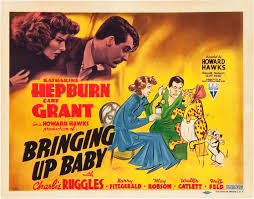
Story’ or ‘Bringing Up Baby’ and ‘His Girl Friday’. Even legendary director
Alfred Hitchcock dabbled in the screwball genre with ‘Mr and Mrs Smith’.
Then a new generation came to take up the genre and the
biggest name of this screwball era was Billy Wilder. He basically built his
early career off of this genre, especially with his very first American movie ‘The
Major and the Minor’. This movie revolved around a young woman that quits her
career to return home but only has enough oney for a child’s ticket and
therefore does the logical thing of posing as a schoolgirl only to become entangled
with a Major who is increasingly worried by his attraction to what he believes
is a young schoolgirl. So as the word Major in the title takes on a different
meaning you can already guess what its accompanying noun was referring to, let’s
move on before this becomes any more awkward. Wilder even used screwball in his
more dramatic work like ‘Sunset Boulevard’ in which a struggling screenwriter
agrees to assist an aging actress get her career back on track.
Wilder then made a direct return to the genre in 1959 with ‘Some
Like it Hot’, the greatest cross dressing film of all time (sorry ‘Rocky Horror
Picture Show’). Named by the American Film Institute as the greatest comedy
movie of all time and the quintessential screwball comedy, Wilder even set it
twenty years ago during the thirties in order to make the environment more in
tune with the screwball themes. Two musicians witness a gangland murder and
must hide out by disguising themselves as women, though it pretends to have
commentary on violence and greed, make no mistake, this movie is about sex. It’s
only become more obvious as time goes on, becoming blatantly subversive
(contradiction in terms) and starred the ultimate iconic sex symbol herself Marylyn
Monroe. Trust me, watch the movie and make it a fun drinking game by taking a
shot with every euphemism and innuendo you see.
So with the genre this successful, why did it die? Simply
because as Bob Dylanput it the next decade, the times they are a changin’.
Censorship in movies is a thing of the past by the time the 1960s roll around
and now filmmakers don’t need to disguise the sexual tension in their movies,
they can just outright show it. Nothing was off limits any more, with rating
systems it meant that appropriate audiences could see appropriate films so
there was no need to have a sex comedy without sex. So the screwball comedy is
well and truly dead.
That’s not to say that the genre is completely buried. There
are still various homages and tributes to the type, the work of Billy Wilder
can still be watched and appreciated today and most of the individual artistic choices
are still being used today in some form. The genre died out not because audiences
grew board with it or the quality began to dip, but the change in cinematic
society rendered it irrelevant.
Comedy is a very interesting genre in movies, it’s probably
the most diverse and accessible variety of movies that can range from any age
group and virtually any style. Think about it, you’ve got a comedy of manners,
slapstick, screwball, parody, anarchy, fish out of water, gross out,
black-comedy or romantic comedy, then you’ve got the limitless hybrid genres
that allows comedy to integrate itself with virtually any kind of film such as
action, horror, fantasy, drama or science fiction. Today most of these deviations
of comedy are still alive and kicking in cinema today, some may not have their
own genre anymore and are merely combined with other forms of humour but for
the most part each aspect of that is still present in our modern movies.
However, some of the ones I listed appear to be completely
dead and buried and would need a complete overhaul or a great comedic mind to
bring them back. This is something I’m going to look at with these articles.
The first one seems to be the screwball comedy. Early pioneers of cinema like
Howard Hawks and Frank Capra shined in the genre, but today no one seems to
make them anymore, the closest thing you’ll find is homage or an assimilated
form. What happened?
The screwball genre is defined as being ‘fables of love masquerading
as hostility’. Many have drawn parallels with film noir as well, except
screwball distinguishes itself with a number of elements such as its comedic
tone and its escapist and farcical themes. It’s also a reversal of the stereotypical
positions of power put forward by gender roles and social classes. During the
Great Depression, there was a general demand for films with a strong social
class critique and hopeful, escapist-oriented themes.
All of this basically means that in screwball, the woman
dominates the relationship. It challenges the masculinity of the man and makes
way for a comedic battle of the sexes involving romance, courtship, bedroom
farce and marriage. The question that one may ask here is, why mask those
themes under a comedy or film-noir style, why not just make a drama involving
them? Three reasons, one was that this was all taking place during the great
depression and audiences wanted escapism, not heavy handed emotional
rollercoasters. Secondly, women’s suffrage had ended and they now finally had
the right to vote so someone immediately had the brilliant idea of capitalising
on this by placing the women in their films in positions of power. Thirdly, you
had the Hayes Code. This prohibited films touching on the subjects of violence,
religion and especially sex. To incorporate the more risqué elements of their
films, studios used the genre as a disguise to appease the censorship boards.
How? They used the verbal sparring between two genders as a
metaphor for the physical sexual tension between them, a sex comedy without the
sex. It was subversive and superbly executed. As time went on though censors
began to latch on to what these writers and studios were doing and tried to
crack down on them, meaning that the creative minds behind the pictures had to
think of increasingly inventive and ingenious ways of conveying innuendo and euphemism
without the censors catching on. In other words the screwball writers always
had to remain one step ahead of the censors while still making an artistically
viable picture and ensuring that it would entertain audiences so it could
generate a profit and allow them to do it all over again, talk about a busy
workload.
So the style evolved and developed as any successful genre
does. Perhaps the most successful screwball director was Ernst Lubitsch, who
crafted many of the standouts of the genre such as ‘Trouble in Paradise’, ‘If I
Had A Million’ and ‘That Uncertain Feeling’. Then you had ‘The Philadelphia
Story’ or ‘Bringing Up Baby’ and ‘His Girl Friday’. Even legendary director
Alfred Hitchcock dabbled in the screwball genre with ‘Mr and Mrs Smith’.
Then a new generation came to take up the genre and the
biggest name of this screwball era was Billy Wilder. He basically built his
early career off of this genre, especially with his very first American movie ‘The
Major and the Minor’. This movie revolved around a young woman that quits her
career to return home but only has enough oney for a child’s ticket and
therefore does the logical thing of posing as a schoolgirl only to become entangled
with a Major who is increasingly worried by his attraction to what he believes
is a young schoolgirl. So as the word Major in the title takes on a different
meaning you can already guess what its accompanying noun was referring to, let’s
move on before this becomes any more awkward. Wilder even used screwball in his
more dramatic work like ‘Sunset Boulevard’ in which a struggling screenwriter
agrees to assist an aging actress get her career back on track.
Wilder then made a direct return to the genre in 1959 with ‘Some
Like it Hot’, the greatest cross dressing film of all time (sorry ‘Rocky Horror
Picture Show’). Named by the American Film Institute as the greatest comedy
movie of all time and the quintessential screwball comedy, Wilder even set it
twenty years ago during the thirties in order to make the environment more in
tune with the screwball themes. Two musicians witness a gangland murder and
must hide out by disguising themselves as women, though it pretends to have
commentary on violence and greed, make no mistake, this movie is about sex. It’s
only become more obvious as time goes on, becoming blatantly subversive
(contradiction in terms) and starred the ultimate iconic sex symbol herself Marylyn
Monroe. Trust me, watch the movie and make it a fun drinking game by taking a
shot with every euphemism and innuendo you see.
So with the genre this successful, why did it die? Simply
because as Bob Dylanput it the next decade, the times they are a changin’.
Censorship in movies is a thing of the past by the time the 1960s roll around
and now filmmakers don’t need to disguise the sexual tension in their movies,
they can just outright show it. Nothing was off limits any more, with rating
systems it meant that appropriate audiences could see appropriate films so
there was no need to have a sex comedy without sex. So the screwball comedy is
well and truly dead.
That’s not to say that the genre is completely buried. There
are still various homages and tributes to the type, the work of Billy Wilder
can still be watched and appreciated today and most of the individual artistic choices
are still being used today in some form. The genre died out not because audiences
grew board with it or the quality began to dip, but the change in cinematic
society rendered it irrelevant.
So ‘The Visit’ is hitting theatres son and once again it
appears that you would need to hire an undercover detective team to find out
that it has been directed by none other than M Night Shyamalan, the director
that everyone loves to hate. In fact only one director seems to be rivalling
him for the spot of the worst high profile director working today, Michael (explosion)
Bay. But who is the worst?
Well looking past the actual quality of their films and
focussing more on the money they make, Michael Bay is miles ahead. Shyamalan
has had one commercial failure after another, to such a point where the studios
will try their best to make sure you don’t know that he’s directing it. I never
heard his name mentioned once in the advertising campaign for ‘After Earth’
while Bay has been openly associated with every project he’s involved with, Bay
didn’t direct ‘Teenage Mutant Ninja Turtles’ but his name was the one that
dominated the trailers. Even with that modest opening day, word of mouth spread
so quickly that the film was dropping in the movie gross charts by day,
starting at one, and finishing at number nine by the end of the week. Bay on
the other hand has maintained a steady income from his films, a huge one in
fact as, annoyingly, ‘Transformers: Age of Multiple Explosions’ was the highest
grossing film of 2014, and Bay did the same thing with ‘That asteroid movie
that wasn’t Deep Impact’ back in’ 1998.
But it’s for that reason that many will say he is worse as
he seems to make films purely for the money, not to get any kind of artistic
expression from it. He has been making the same kind of film for the past two
decades, lots of action, little plot, sorted. Even his best film ‘The Rock’ was
certainly not as complex as Shyamalan’s best effort ‘The Sixth Sense’.
Though that may not be a fair comparison, as both of them were
good, and are now bad, for very different reasons. To the average movie goer
the worst one will probably be Shyamalan, as Bay’s movies are still sort of
fun. ‘The Rock’ and the ‘Bad Boys’ films are certainly fun to watch and there’s
some very small enjoyment to have in the ‘Transformers’ franchise and ‘Pain and
Gain’ but only on the lowest common denominator, and if you try to watch them
back to back you will be left catatonic by the multiple and never ending explosions,
stereotypes and revolving shots.
Shyamalan on the other hand is notorious for making arthouse
films that aren’t well reviewed, so is there any point in branding them
arthouse anymore? Bay has always said that he makes films for audiences and not
critics, but with Shyamalan’s movies, if you can’t get good reviews surely
there’s no point. ‘The Village’ was a failed psychological thriller and ‘The
Lady in the Water’ was one of the worst attempts at a dark fantasy ever, it
felt like something Guilmero Del Toro had left on the cutting room floor and
the cleaner had assembled them with whatever was left.
Also, Bay was held up as a good action director at one
point, and criticised for never doing anything new. But ‘The Sixth Sense’ was
held up as one of the greatest horror movies of the modern age and many were
calling its director ‘The next Spielberg’. When you think about how far
Shyamalan has fallen in comparison to his potential, it’s quite staggering.
‘The Sixth Sense’ of course is mainly associated with its
final twist and this brings me on to another point. While Bay is known for a
number of cheap traits such as racial and sexual stereotypes, explosions and
his frantic editing pace. Shyamalan meanwhile is linked with one thing, a
twist. Nearly every film has featured a twist and none of them have topped ‘The
Sixth Sense’, instead they are viewed as cheap, exploitive and simply bad. The
twist in ‘Signs’ ruined that movie for me (invading aliens turn out to be
vulnerable to water, having invaded a planet that is 60% water), in ‘The
Village’ this Victorian era community is actually in the modern world, somehow.
But when he tries to do a film without a plot twist they are
equally as bad. Look at ‘Lady in the Water’. This film stars Shyamalan as a
writer who is destined to save the world through beautiful writing, really?
That’s like Scorsese casting himself as Henry Hill, or Francis Ford Coppola
casting himself as Don Corleone. Then in ‘After Earth’ the plot (which he didn’t
write to be fair) was nonsensical and riddles with obvious directing. ‘The
Happening’ is the worst attempt as a horror film in recent memory, working
better as the best unintentional comedy in recent years. Then you have the
atrocity that is ‘The Last Airbender’, in which he is not only running his own
material, but butchering material that had legions of followers and admirers
that were hoping for a great movie.
However, most of these films are original, they are original
ideas in an age where more and more people are criticising Hollywood for having
no original ideas. What’s more is the fact that however bad they are I wouldn’t
say Shyamalan is a lazy filmmaker. Bay on the other hand has been making the
same ideas with the same unoriginal concepts and the same clichés over and over
again. Shyamalan has dabbled in horror, neo-noir, science fiction, fantasy and
though most have been terrible, most have also been unique. Not only are all of
Bay’s films the same none of them are really original. We all know ‘Transformers’
was based on a toy and cartoon series, then you have ‘Pain and Gain’ which many
people are surprised about to hear was an original story as the callousness with
which he treats real murder and crime is almost laughable. Then there's 'Pearl Harbour', when Spielberg made a war film he made it loom realistic, Bay made a war film to make it look cool and sacrificed all authenticity, dramatic potential and quality in the process. There’s also no risk
to his movies, I know that this is going to be another big dumb nonsensical action
film before I see it, maybe, just maybe with M Night Shyamalan his next film is
a return to form, because he’s trying new things and taking chances. True, many
are horrifically awful, and I would rather watch ‘Pain and Gain’ twenty times
than go through ‘The Last Airbender’ again, but I’m still going to see ‘The
Visit’ because there’s a chance that it could surprise me. But let me close this debate with a cool and refreshing bottle of Bud-Light, see what I'm doing, product placement, another reason why Michael Bay is terrible.
So those are some ramblings but out of these two, who do you
think is the worst director? Let me know in the comments below. Thanks and bye.


